
Computer Cloud: A Practical Business Decision Guide
Computer cloud services are appropriate when they solve a defined business, data or operational problem better than existing infrastructure. The first decision is not which cloud provider or tool to buy. It is whether the organisation needs more scalable computing, easier access to shared data, faster analytics delivery, stronger resilience, managed technical services or a simpler way to connect systems. Begin by naming the decision or workflow that is blocked today, then test whether cloud capability is the missing element.
The main caution is to avoid treating a technology request as a complete business case. Moving unreliable data, unclear metrics or poorly controlled processes to the cloud does not fix them. It can make the same weaknesses faster, more widely accessible and more expensive. A short diagnostic is useful when the problem, architecture or readiness is unclear. A defined project is appropriate when scope and acceptance criteria can be stated. Ongoing support makes sense only when cost, data pipelines, governance and platform operations create a genuinely continuous workload.
This guide helps business owners, technology leaders, finance teams, operations teams and data leaders decide what should move, what should remain, what internal preparation is required and where a data consultant may add practical value.
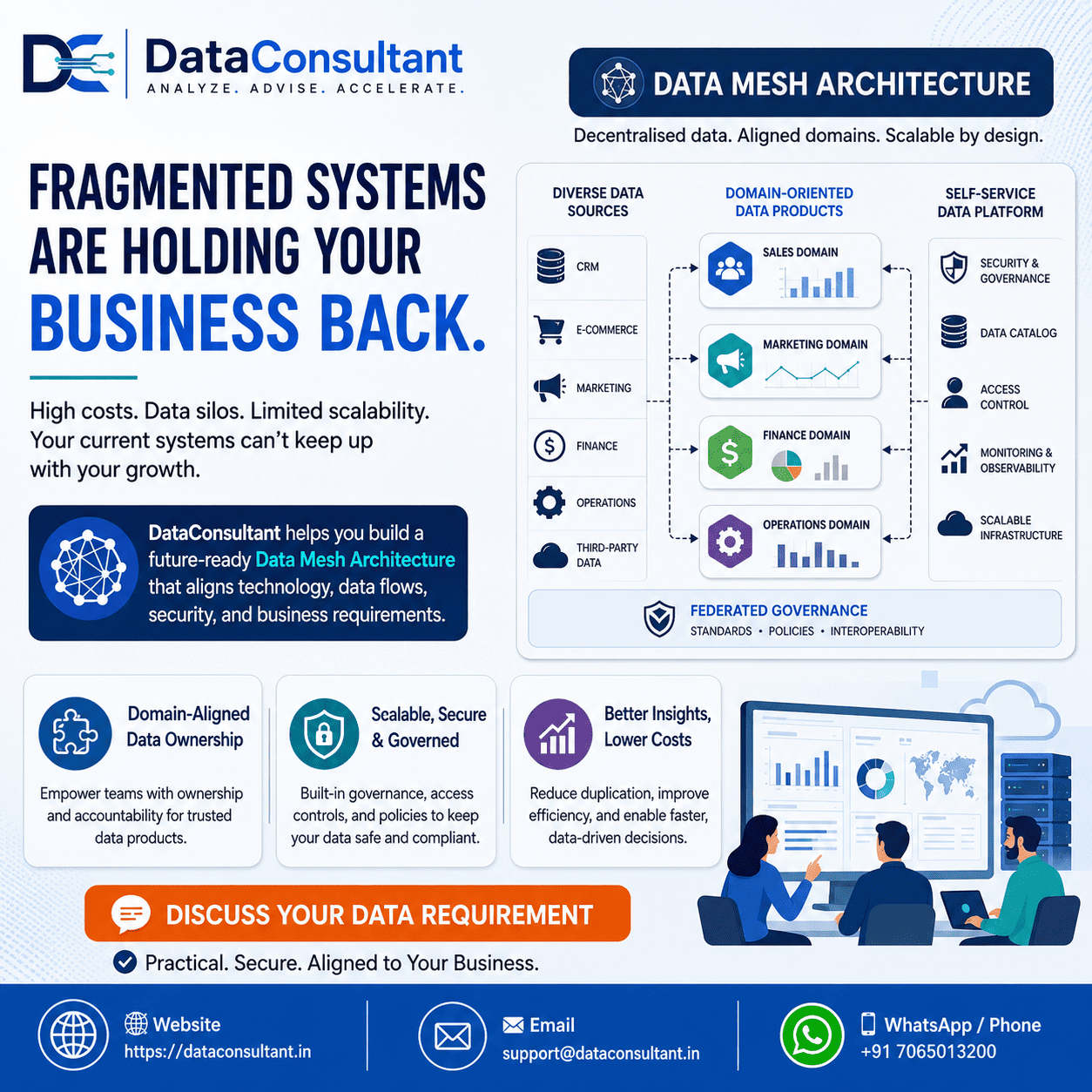
Quick Answer: Use Cloud for a Defined Need
Use computer cloud services when they provide a clear advantage in scalability, collaboration, availability, managed capability or speed of delivery. Keep an existing local or private environment when workloads are stable, tightly coupled to local equipment, restricted by policy, or cheaper and safer to operate without migration.
Use internal staff when the workload, data and target design are already clear. Buy or configure a tool when the missing capability is specific and integrations are straightforward. Use a short diagnostic when requirements, costs or risks are disputed. Use a defined consulting project for architecture, migration, data engineering, governance or analytics delivery. Choose ongoing support or a managed team only for recurring multi-disciplinary work.
Do not engage a consultant before defining the business decision or operational problem. The first useful output may be a decision not to migrate yet, or to fix data quality and ownership before investing in a cloud platform.
Key Takeaways
- Start with the business outcome: cloud is an operating choice, not an objective by itself.
- Assess data readiness: poor source data and inconsistent definitions remain poor after migration.
- Retain internal ownership: business, data, security and technology leaders must own decisions and controls.
- Separate project scope from consumption: migration fees and ongoing platform costs require different estimates.
- Demand concrete deliverables: architecture, migration waves, controls, tests, documentation and handover should be explicit.
- Design governance early: access, privacy, regions, retention, recovery and supplier responsibilities affect the architecture.
- Plan knowledge transfer: the organisation must be able to operate, review and improve the environment after delivery.
Table of Contents
- Decide whether cloud solves the real problem
- Check data and organisational readiness
- Compare cloud delivery choices
- Set architecture and governance requirements
- Plan a phased cloud implementation
- Estimate cost, time and resources
- Measure cloud outcomes
- Apply the decision to real situations
- Use specialist support selectively
- Summary
Decide Whether Cloud Solves the Real Problem
A cloud initiative is justified when the organisation can connect it to a measurable operational need. Common triggers include unpredictable computing demand, slow provisioning, fragmented data, fragile local infrastructure, difficult remote access, lengthy analytics deployment or a need for managed database, security and recovery services.
Separate business problems from platform requests
“We need a cloud data warehouse” is a proposed solution. “Regional managers wait ten days for reconciled sales and inventory information” is a business problem. The second statement allows the team to test several remedies: improve source capture, standardise KPI definitions, redesign integration, configure an existing platform or create a new cloud data environment.
Cloud may not be the primary remedy when the root cause is missing ownership, inconsistent processes, poor data entry or reports that nobody uses. The practical decision rule is to document the current constraint, its business effect, the users affected and the evidence that a platform change is necessary.
Choose the smallest appropriate intervention
A limited diagnostic can map workloads, data flows, controls, costs and risks before the organisation commits to a platform. A defined project fits a bounded migration or analytics use case. A broader programme is justified when multiple domains, applications and operating teams must change together.
Check Data and Organisational Readiness
Cloud readiness depends on business clarity, data condition, technical access, governance and ownership. A business does not need perfect maturity, but it needs enough evidence to avoid moving unknown dependencies into a new environment.
Inventory applications, databases, interfaces, reports and scheduled jobs. Identify data owners, critical records, retention needs, service dependencies and recovery requirements. Review whether internal teams can provide system access, validate outputs, approve controls and support users during change.
The NIST cloud computing reference architecture provides a useful vocabulary for cloud actors and responsibilities. Platform architecture should also reflect the organisation's own legal, contractual and operational context.
Compare Cloud Delivery Choices
The correct choice depends on problem clarity, internal capability, urgency, continuity and risk. A software subscription may appear simple, but configuration, integration, controls and adoption still require accountable work.
| Option | Best fit | Expected outputs | Internal requirement | Main risk |
|---|---|---|---|---|
| Internal team | Clear workload, capable staff and limited scope | Configuration, migration and operating procedures | Architecture, security and delivery capacity | Competing priorities delay work |
| Software tool | Defined need and compatible data sources | Configured service, connectors and user access | Requirements, integration and governance ownership | Tool does not solve unclear processes |
| Short diagnostic | Unclear scope, costs, dependencies or readiness | Current-state findings, options and prioritised roadmap | Interviews, documentation and system evidence | Recommendations stall without a sponsor |
| Defined consulting project | Bounded architecture, migration or analytics outcome | Design, build, tests, documentation and handover | Business validation and technical cooperation | Scope expands without acceptance criteria |
| Ongoing consultant support | Recurring optimisation, data and governance needs | Backlog delivery, monitoring and advisory support | Regular prioritisation and retained ownership | Dependency if knowledge is not transferred |
| Dedicated specialist or managed team | Continuous multi-disciplinary cloud workload | Predictable delivery and operating capacity | Executive sponsor and operating cadence | Capacity is wasted without a clear roadmap |
A hybrid model is often practical: external specialists assess and accelerate complex work while internal owners retain decisions, approvals, service management and long-term capability.
Set Architecture and Governance Requirements
A credible cloud design must explain where data comes from, where it is processed, who can access it, how services recover and who is accountable for ongoing operation. Architecture should be driven by workload characteristics rather than by the largest available service catalogue.
Define the technical boundaries
- List data sources, interfaces, volumes, refresh frequencies and latency needs.
- Identify applications that must remain local and connections they require.
- Define availability, backup, recovery and performance requirements.
- Choose approved regions, environments and deployment patterns.
- Specify monitoring, logging, incident response and change controls.
- Document portability needs and dependencies on proprietary services.
Build security and data governance into the design
Apply data classification, least-privilege access, encryption, key management, retention, deletion, audit logging and supplier oversight from the beginning. The NIST Cybersecurity Framework offers a risk-based structure for managing cybersecurity outcomes. The ISO/IEC 27001 standard is another recognised reference for information security management.
Governance must assign decisions between the customer and the cloud provider. Default platform controls do not remove the organisation's responsibility for user access, data use, configuration, monitoring and legal compliance.
Plan a Phased Cloud Implementation
Start with a workload that is useful enough to test the design but bounded enough to control. Establish baseline performance and cost, prepare the data, configure security, migrate or integrate the workload, test outputs and recovery, then review evidence before scaling.
Expect decision-ready deliverables
- Business case and current-state assessment.
- Application, workload and data inventory.
- Target cloud architecture and responsibility model.
- Migration waves with dependencies and rollback criteria.
- Security, privacy, access and data-governance requirements.
- Cost model covering implementation and recurring services.
- Test plan, acceptance criteria and quality-assurance evidence.
- Operating procedures, monitoring, documentation and handover.
- Training and knowledge-transfer sessions for internal owners.
For migration planning, official provider guidance such as the Microsoft Cloud Adoption Framework can help structure strategy, planning, readiness and governance. Use provider frameworks as inputs, not as substitutes for organisation-specific requirements.
Decision rule: scale only after the pilot demonstrates that data is accurate enough, controls operate as intended, users can complete the target workflow and the ongoing cost is understood.
Estimate Cost, Time and Resources
Cloud cost is shaped by service selection, storage, computing, network transfer, availability, licensing, monitoring, support and growth. Migration also requires discovery, data preparation, integration, testing, security review, change management and internal subject-matter time.
A short diagnostic may be completed through focused workshops and evidence review. A bounded migration may take several weeks or months depending on data condition and integrations. A multi-system modernisation usually needs phased delivery because technical dependencies, operating changes and governance approvals must be coordinated.
Budget for internal participation
Business owners validate priorities and acceptance criteria. Data owners approve definitions and use. Technology teams provide access and integration knowledge. Security, privacy and risk teams review controls. Finance and procurement teams test commercial assumptions. Service owners accept monitoring, support and recovery responsibilities.
Compare total cost over a realistic period rather than only the initial subscription. Include unused capacity, data transfer, duplicate environments, premium support, specialist skills and the effort required to control consumption.
Measure Cloud Outcomes After Delivery
Measure whether the cloud environment improves the decision or workflow that justified it. Useful indicators may include provisioning time, report availability, pipeline reliability, recovery performance, user adoption, data-quality exceptions, support demand and actual cost against the approved model.
- Confirm that agreed workloads and datasets operate within acceptance thresholds.
- Track service availability, failed jobs, recovery tests and unresolved incidents.
- Compare forecast and actual consumption using consistent assumptions.
- Review access, configuration and data-handling exceptions.
- Test whether users receive trusted information sooner or complete work more reliably.
- Assess whether internal teams can operate and change the environment without avoidable dependency.
Do not attribute revenue, savings or productivity changes to cloud migration without considering process changes, staffing, demand, adoption and other contributing factors.
Practical Computer Cloud Decisions
Ecommerce reports disagree
An ecommerce business wants to move every report to a cloud BI tool because finance and marketing show different revenue totals. The mistaken assumption is that a shared dashboard will create agreement. The actual problem is inconsistent order, refund and attribution definitions. A short diagnostic should establish metric ownership, source mappings and data-quality issues before selecting the platform. Deliverables may include a KPI dictionary, lineage map, issue backlog and target reporting architecture. Finance, marketing, operations and data owners must participate.
Manual spreadsheets limit growth
A professional-services company relies on emailed spreadsheets for utilisation and project-margin reporting. The real need is controlled data collection, integration and repeatable management reporting. A defined cloud project may combine source assessment, a small data pipeline, governed semantic definitions, automated reports and handover. Buying a large platform without redesigning inputs would add cost without removing manual fragility.
Predictive analytics is premature
A startup wants a computer cloud machine-learning environment for demand forecasting. Historical records are incomplete, product categories change frequently and forecast ownership is unclear. The better decision is a limited readiness assessment followed by improved data capture and baseline reporting. Advanced modelling should wait until the business has a stable target, sufficient history and a process for reviewing predictions.
Enterprise migration needs continuity
An enterprise plans to modernise a data warehouse while connecting regional systems and retiring legacy reporting. Several data disciplines and sustained coordination are required. A managed data team may be appropriate for architecture, engineering, quality, governance, testing and release support, while internal leaders retain priorities, risk acceptance and service ownership.
Use Specialist Support Only Where It Adds Value
External support is most useful when the organisation needs an independent cloud and data maturity assessment, target architecture, migration roadmap, data engineering, governance design, analytics implementation or temporary specialist capacity. It is less useful when the business question is undefined or internal owners cannot provide access, decisions and validation.
DataConsultant can support a defined diagnostic, a cloud data-platform modernisation project, migration planning, data architecture, integration, governance or ongoing data and analytics operations. The engagement should remain limited to the actual problem and should specify deliverables, assumptions, internal responsibilities, quality checks, documentation and handover.
Discuss Your Cloud Data Decision
Summary: Choose Cloud for Evidence-Based Reasons
A data consultant is appropriate when cloud decisions are blocked by unclear architecture, complex migration, weak data foundations, governance requirements or a temporary shortage of specialist capability. Internal staff may be sufficient when the workload is clear, data is accessible and the team has time and expertise. A software tool may be sufficient when processes, metrics, integrations and ownership are already defined.
Use a short diagnostic when the business goal, data quality, access, costs, security or responsibilities are uncertain. Use a defined project when scope, timeline, budget, deliverables and acceptance criteria can be agreed. Choose ongoing support or a managed team when optimisation, pipelines, governance and platform operation create continuous work. In every model, validate internal ownership, documentation, quality assurance, knowledge transfer and handover before delivery begins.
At DataConsultant.in, we help organisations turn data and AI priorities into governed, reliable, and practical business capability.
Frequently Asked Questions
What does computer cloud mean for a business?
Computer cloud usually means using computing resources such as servers, storage, databases, analytics and software through an internet-connected cloud platform rather than operating everything on local computers or privately managed infrastructure. The business decision is not simply whether cloud technology is modern, but which workloads, data and operating responsibilities should move, remain, or be redesigned.
Does every business need to move its data to the cloud?
No. Cloud services are useful when they improve scalability, access, resilience, delivery speed or managed capability. Sensitive workloads, low-latency systems, legacy dependencies, contractual restrictions or predictable local processing may justify retaining some systems on premises. Many organisations use a hybrid approach.
Should we buy a cloud tool or hire a data consultant?
Buy or configure a tool when requirements, data definitions, integration patterns and internal ownership are already clear. Use a data consultant when teams need to clarify the business problem, assess data maturity, design architecture, plan migration, establish governance or coordinate delivery across several systems and stakeholders.
What should be assessed before a computer cloud project starts?
Assess the business objective, workload inventory, data quality, integrations, security classification, privacy obligations, user access, recovery needs, internal skills, operating ownership and expected costs. A short diagnostic is often appropriate when these areas are uncertain or different teams hold conflicting assumptions.
How much does a cloud data project cost?
Cost depends on data volume, processing demand, service choices, migration complexity, integration work, security requirements, availability targets, support coverage and internal participation. Proposals should separate one-off discovery and migration costs from recurring consumption, licensing, monitoring, support and optimisation costs.
How long does cloud migration usually take?
A limited discovery or proof of concept may take weeks when access and scope are ready. A defined migration can take several months, while a multi-system modernisation may require phased delivery over a longer period. Timelines increase when data quality, legacy interfaces, approvals, testing or operating-model changes are complex.
How should cloud data security and governance be handled?
Use data classification, least-privilege access, encryption, logging, retention rules, backup and recovery controls, approved regions, supplier oversight and documented accountability. Controls should align with the organisation's legal, regulatory and contractual obligations rather than relying only on default platform settings.
What deliverables should a cloud data consultant provide?
Useful deliverables may include current-state findings, workload and data inventory, target architecture, migration waves, cost model, security and governance requirements, implementation backlog, test and acceptance criteria, operating procedures, documentation, training and handover materials.
When is ongoing cloud consulting support appropriate?
Ongoing support is appropriate when cloud costs, data pipelines, reporting needs, security controls and platform services require continuous monitoring or improvement, but the workload does not yet justify a complete internal team. The arrangement should include clear ownership and knowledge transfer to avoid unnecessary dependency.